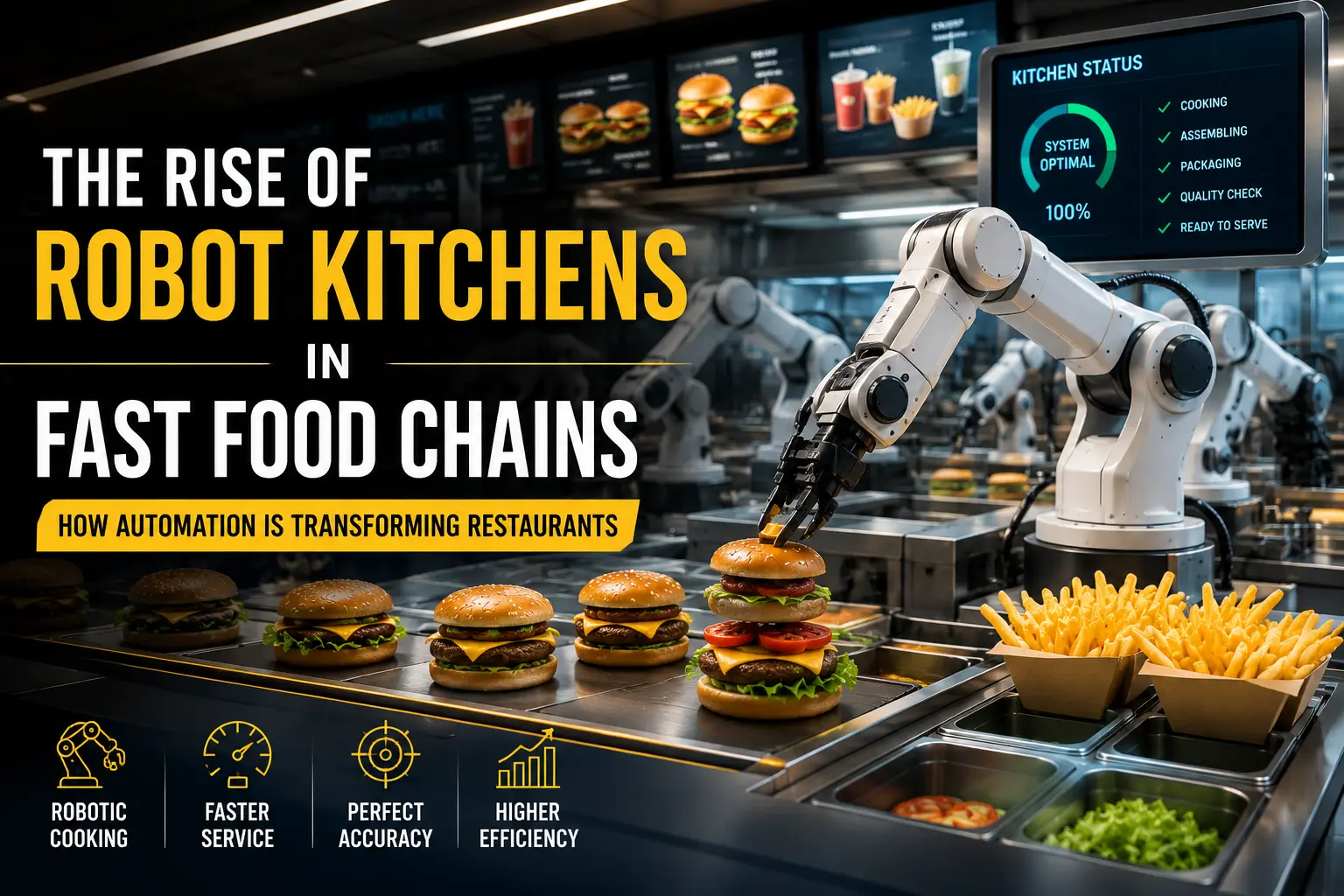
Robot Kitchens in Fast Food Chains: How AI Is Transforming Restaurants (2026–2030)
Discover how robot kitchens in fast food chains are transforming restaurants with AI automation, robotic cooking systems, faster service, and smarter food preparation.
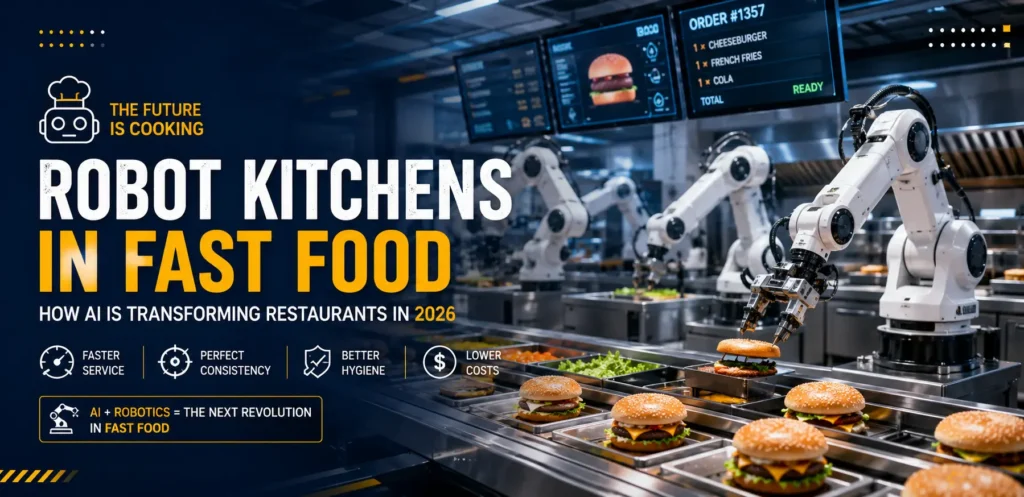
Robot kitchens in fast food chains are transforming the global restaurant industry. From AI-powered cooking systems to fully automated food preparation, restaurants are rapidly shifting toward smart kitchens that improve speed, consistency, and efficiency.
Imagine walking into a fast food restaurant where burgers are flipped by robotic arms, fries are cooked with machine precision, and orders are prepared without human error.
What sounded like science fiction just a few years ago is quickly becoming reality.
Experts believe AI kitchens in fast food chains could become standard by 2030. The rise of robot kitchens in fast food chains is one of the biggest transformations the restaurant industry has seen in decades. As labor costs increase, customer expectations grow, and technology becomes more advanced, restaurants are turning to automation to improve speed, consistency, and efficiency.
From major global brands to innovative startups, companies are investing billions of dollars into robotic cooking systems and AI-powered restaurant technology. The goal is simple: deliver food faster, reduce waste, and create a better customer experience.
The future of fast food may not be run entirely by robots, but automation is already changing how meals are prepared around the world.
Quick Summary
- Robot kitchens use AI and robotics to automate fast food preparation
- They improve speed, consistency, efficiency, and food safety
- Global brands like White Castle, Chipotle, and Sweetgreen are already testing automation
- AI helps predict demand, manage inventory, and optimize cooking systems
- Brands like AlBaik may adopt robot kitchens and smart food factories in the future
- By 2030, automation will become standard across fast food operations worldwide
In this Article:
What Are Robot Kitchens or Smart Kitchens?
A smart kitchen is an automated food preparation system that uses robotics, sensors, artificial intelligence, and software to perform cooking tasks traditionally handled by humans.
These systems can:
- Fry chicken
- Grill burgers
- Prepare pizzas
- Assemble sandwiches
- Dispense sauces
- Package meals
- Monitor food temperatures
Unlike traditional kitchens, automated fast food systems can operate with incredible precision and consistency.
Every burger receives the same cooking time. Every portion contains the correct ingredients. Every order follows the same quality standards.
This consistency is one of the biggest reasons fast food chains are exploring automation.
Why Robot Kitchens in Fast Food Chains Are Growing Rapidly
The global restaurant industry faces several major challenges.
Rising Labor Costs
Many restaurants struggle with increasing wages and staff shortages.
Robot kitchens help reduce repetitive tasks while allowing employees to focus on customer service and quality control.
Faster Service
Modern customers expect speed.
Automated systems can prepare food more efficiently, reducing wait times during busy hours.
Improved Accuracy
Mistakes cost money.
Robotic systems follow programmed instructions and reduce order errors, helping restaurants maintain customer satisfaction.
Reduced Food Waste
Smart kitchen technology can track ingredients, predict demand, and minimize waste.
This improves profitability while supporting sustainability goals.
Real-World Examples of Robot Kitchens
Automation is no longer a future concept. Several companies are already deploying robotic kitchen technology.
Miso Robotics
Miso Robotics developed the famous robotic kitchen assistant known as Flippy.
Flippy can monitor fry stations, cook food, and manage multiple cooking tasks simultaneously.
White Castle
White Castle has tested robotic fry stations to improve efficiency and consistency across locations.
Chipotle Mexican Grill
Chipotle has invested in automated food preparation technology to speed up operations and improve productivity.
Sweetgreen
Sweetgreen continues to experiment with automation systems designed to streamline meal production.
These examples show that robot kitchens are already moving from pilot projects to real-world implementation.
How AI and Robotics Work Together
The growth of robot kitchens in fast food chains is closely linked with advances in artificial intelligence and machine learning. Robot kitchens are powered by more than robotic arms.
Artificial intelligence acts as the brain behind many automated restaurant systems.
AI helps restaurants:
- Forecast customer demand
- Predict busy periods
- Manage inventory
- Optimize cooking schedules
- Reduce ingredient shortages
When combined with robotics, AI creates a smart restaurant ecosystem capable of learning and improving over time.
How Robot Kitchens Could Transform Albaik Operations
As restaurant technology continues to evolve, fast food brands such as Albaik may increasingly benefit from robot-powered kitchens and large-scale food production systems designed for speed, consistency, and efficiency.
Smart Robot Kitchens
Robot kitchens use automated cooking technology to perform repetitive food preparation tasks with precision. Future systems could assist with:
- Frying chicken at controlled temperatures
- Standardizing cooking times
- Automating breading and preparation processes
- Sorting and packaging food items
- Monitoring food safety and quality standards
By reducing manual variation, automated systems can help ensure that meals maintain consistent taste and quality across multiple restaurant locations.
Mega Food Factories and Centralized Production
Many large restaurant chains around the world are investing in centralized food production facilities that support multiple outlets from a single location.
Potential benefits include:
- Faster large-scale production
- Centralized quality control
- Reduced operational errors
- Consistent food preparation standards
- Improved support for international expansion
Centralized production systems can help restaurants maintain the same customer experience regardless of location.
Maintaining Consistency Through Automation
One of the biggest advantages of smart kitchen technology is consistency. Automated systems can help monitor:
- Frying time
- Oil temperature
- Ingredient measurements
- Portion sizes
- Packaging standards
This level of control helps restaurants deliver the same quality and flavor customers expect with every order.
Benefits for Growing Fast Food Brands
Robot kitchens and centralized food production systems may offer several advantages:
- Higher operational efficiency
- Reduced human error
- Faster food production
- Lower food waste
- Better scalability for global growth
As automation technology continues to improve, smart kitchens could play an increasingly important role in the future of fast food operations worldwide.
Will Robot Chefs Replace Human Workers?
One of the most common concerns is whether robots will replace restaurant employees.
The reality is more complex.
Most experts believe automation will replace repetitive tasks rather than entire jobs.
Human employees remain essential for:
- Customer service
- Quality assurance
- Problem-solving
- Restaurant management
- Hospitality
Instead of replacing workers completely, robot kitchens are likely to change how restaurant teams operate.
Employees may spend less time on repetitive cooking tasks and more time improving customer experiences.
Benefits of AI Kitchens or Robot Kitchens in Fast Food Chains for Customers
Customers may experience several advantages as restaurant automation expands.
Faster Orders
Automated systems can process food more quickly during peak hours.
Better Consistency
Meals are prepared using standardized cooking procedures.
Improved Food Safety
Robots can reduce contamination risks by minimizing unnecessary food handling.
Greater Personalization
Future AI systems may customize meals based on customer preferences, dietary goals, and previous orders.
The Future of Robot Kitchens by 2030
By 2030, many industry experts expect automation to become a standard feature in fast food operations.
Future innovations may include:
- Fully autonomous cooking stations
- AI-powered drive-thrus
- Smart inventory systems
- Predictive food production
- Personalized meal recommendations
- Autonomous food delivery integration
Countries such as the United States, Saudi Arabia, and United Arab Emirates are expected to be among the leaders in restaurant technology adoption.
Could Fast Food Chains Like Albaik Use Robot Kitchens?
As restaurant technology evolves, major fast food brands such as Albaik may increasingly explore automation opportunities through smart kitchens, AI-powered food preparation systems, and centralized production facilities.
Future possibilities include:
- Automated frying systems
- Smart queue management
- AI demand forecasting
- Kitchen workflow optimization
- Digital ordering integration
These technologies could help fast food chains improve efficiency while maintaining food quality and customer satisfaction.
🔗 Related Reading
- Albaik Menu With Prices 2026
- Future of Fast Food AI: How Restaurants Will Change by 2030
- How to Order Albaik Online
- Albaik History
Frequently Asked Questions
What is a robot kitchen?
A robot kitchen is an automated food preparation system that uses robotics, sensors, and artificial intelligence to perform cooking and kitchen tasks.
Are robot kitchens already being used?
Yes. Several restaurant brands are already testing or deploying robotic cooking systems in commercial environments.
Will robots replace chefs?
Robots are more likely to assist with repetitive cooking tasks rather than completely replace chefs and restaurant staff.
Why are fast food chains adopting automation?
Automation helps improve speed, consistency, efficiency, and food quality while reducing operational costs.
Are Robot Kitchens in Fast Food Chains Safe?
Robot kitchens in fast food chains use sensors, temperature controls, and automated monitoring systems to improve food safety and consistency.
Could Albaik use robot kitchens in the future?
As restaurant automation expands globally, brands like AlBaik may adopt robot kitchen systems, AI-powered food preparation, and centralized production facilities to improve efficiency, consistency, and scalability.
Final Thoughts
As investment increases, robot kitchens in fast food chains will continue transforming how restaurants prepare and serve food.
The rise of robot kitchens in fast food chains represents one of the most important shifts in modern food service.
As artificial intelligence, robotics, and automation continue to advance, restaurants will become smarter, faster, and more efficient than ever before.
The winners of the next decade will likely be the brands that successfully combine technology with excellent customer experiences.
Robot kitchens are not replacing the restaurant industry—they are reshaping it.